English
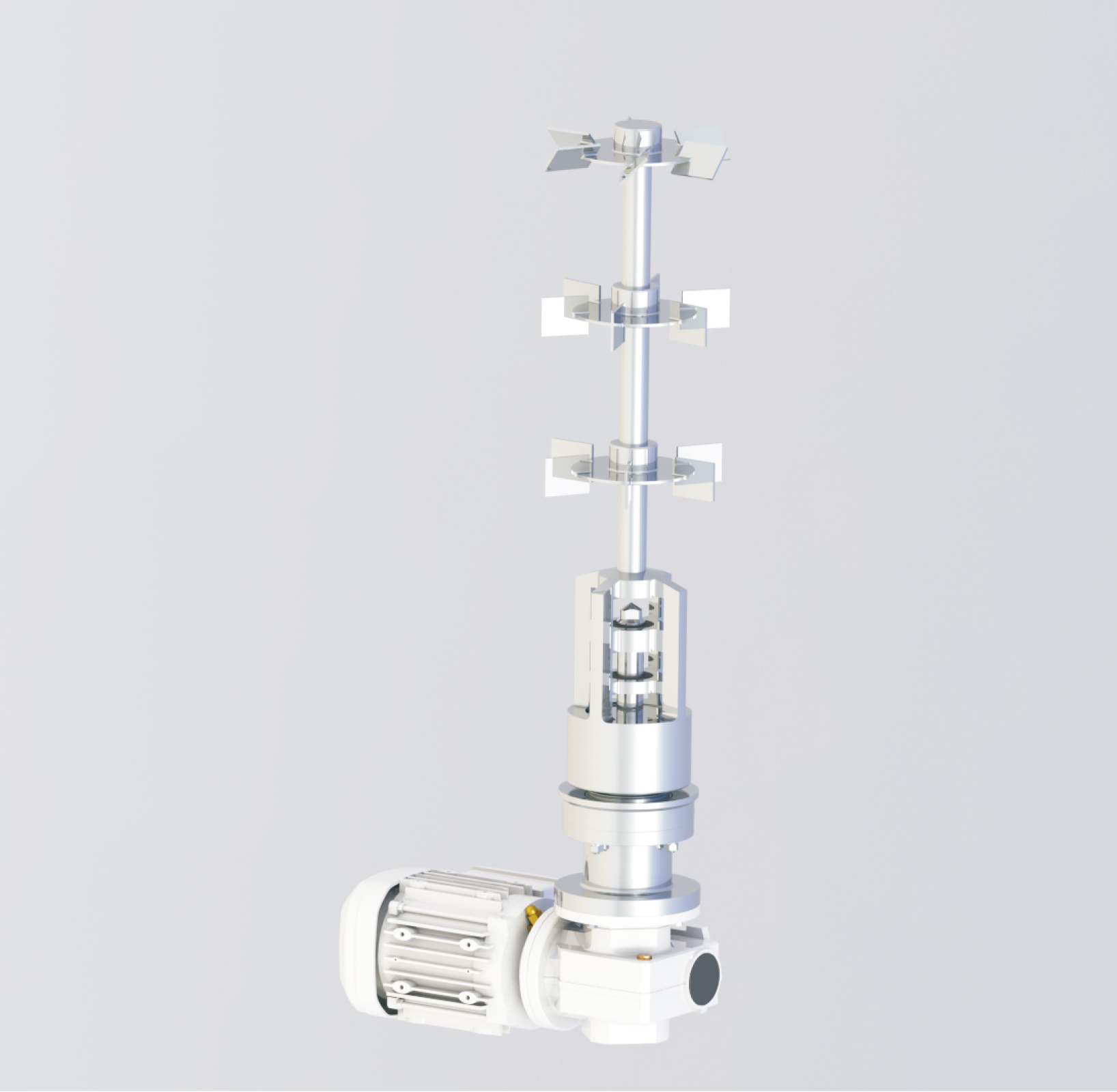
This multi-tier bottom-mounted magnetic mixer integrates an efficient vertical structure with bottom-driven magnetic coupling technology. Engineered specifically for industrial process streams requiring the parallel processing of multiple large-volume batches, this configuration extends processing capability into vertical space. By utilizing vertical spatial distribution, the system achieves high-throughput mixing performance within a minimal physical footprint, presenting a clear spatial advantage for modern facility layouts where floor space allocation must be strictly managed.
The engineering foundation relies on a bottom-mounted magnetic drive mechanism located entirely beneath the processing vessel. By transmitting rotational torque through a solid containment barrier via magnetic force, the system completely eliminates the need for mechanical shaft seals. This fully enclosed hermetic design removes potential mechanical leak paths and sealing failure points. The resulting containment integrity is fundamentally aligned with the stringent operational demands of high-cleanliness environments and hazardous production zones requiring comprehensive explosion-proof compliance. Because there is no physical shaft penetration into the process fluid, the risks associated with product contamination or hazardous vapor escape are successfully mitigated through static sealing principles.
The spatial architecture marks a departure from traditional single-tier layouts by integrating multiple processing levels into a single vertical footprint. This spatial consolidation significantly reduces the horizontal footprint required for parallel operations, directly increasing production capacity per unit area without expanding facility boundaries. The vertical orientation allows processing facilities to maximize volumetric efficiency, optimizing factory layout planning and operational workflow in large-scale processing environments.
Mechanical stability and maintenance workflows are further enhanced by this bottom-driven design language. Positioning the heavy drive components beneath the vessel establishes a low center of gravity, which inherently enhances structural stability and minimizes mechanical vibration during continuous operation. Furthermore, the complete absence of top-mounted mechanical overhead structures or heavy cantilevers clarifies the workspace above the vessels. This open overhead configuration simplifies the physical handling, loading, and chemical charging of the process containers, while simultaneously making routine sanitization, wash-down procedures, and preventative maintenance activities more straightforward and ergonomically secure for operating personnel.