
English
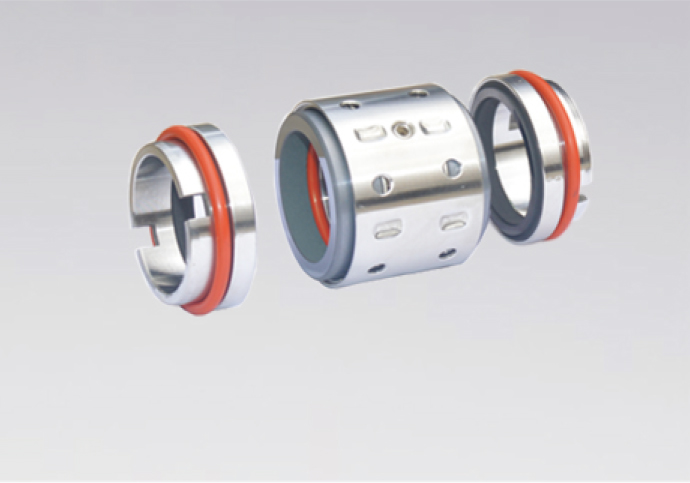
In sanitary fluid processing, single seals face limitations when handling aggressive, high-value, or volatile fluids. For cosmetic, food, and pharmaceutical applications involving fluid crystallization, high temperatures, or strict zero-leakage mandates, double mechanical seal systems offer maximum process security. Understanding the fluid circuit, pressure balancing, and environmental isolation of double seals is essential for preventing batch contamination and mechanical face seizure.
A double mechanical seal incorporates two pairs of primary sealing faces instead of one. The configuration features an inboard seal facing the process fluid chamber and an outboard seal facing the external atmosphere. Between these two seals lies an engineered sealing chamber filled with a dedicated barrier or buffer fluid.
The primary classification depends on the fluid loop pressure compared to the pump chamber pressure:
Many cosmetic ingredients, such as concentrated surfactants, sugars, and polymers in shampoos or lotions, are prone to phase transformation. When these fluids contact ambient air via single seal micro-gaps, they evaporate and form hard, abrasive crystals that score the seal faces.
Double mechanical seals completely eliminate atmospheric crystallization by submerging both faces in the continuous intermediate liquid loop. This liquid constant-flush carries away heat, maintains stable face temperatures during localized pressure drops, and continuously dissolves potential crystal precipitates before they migrate across the polished sealing topology.
To comply with 3-A and FDA hygienic criteria, double seal infrastructure requires careful design integration. The intermediate fluid loop must use food-grade lubricants, typically a USP-grade glycerin-water mixture or pure demineralized water, ensuring zero risk of chemical contamination if micro-leakage occurs.
Furthermore, the dual casing internal geometries are precision-machined to facilitate full fluid displacement during Cleaning-in-Place (CIP) routines, preventing bacteria from colonizing within hidden pockets of the barrier chamber.
Because the seal faces are permanently lubricated by the independent barrier circuit, a double mechanical seal configuration provides high protection against sudden system faults. If the pump experiences unexpected dry running due to tank starvation, the main seal faces will not experience instantaneous thermal shock or cracking. The barrier fluid reservoir continues to dissipate friction heat, protecting the hardware and extending the component lifespan during demanding batch changeovers.