English
When it comes to selecting the right material for fluid handling and mixing equipment, the debate between SS304 and SS316 is not just about price—it's about performance, longevity, and the total cost of ownership. As a seasoned industrial equipment manufacturer, I've seen too many purchasing decisions hinge solely on upfront cost, only to result in premature failure, costly downtime, and compromised product quality. Let me walk you through the technical realities that matter most to your bottom line.
SS304: The Cost-Effective Workhorse for Standard Applications
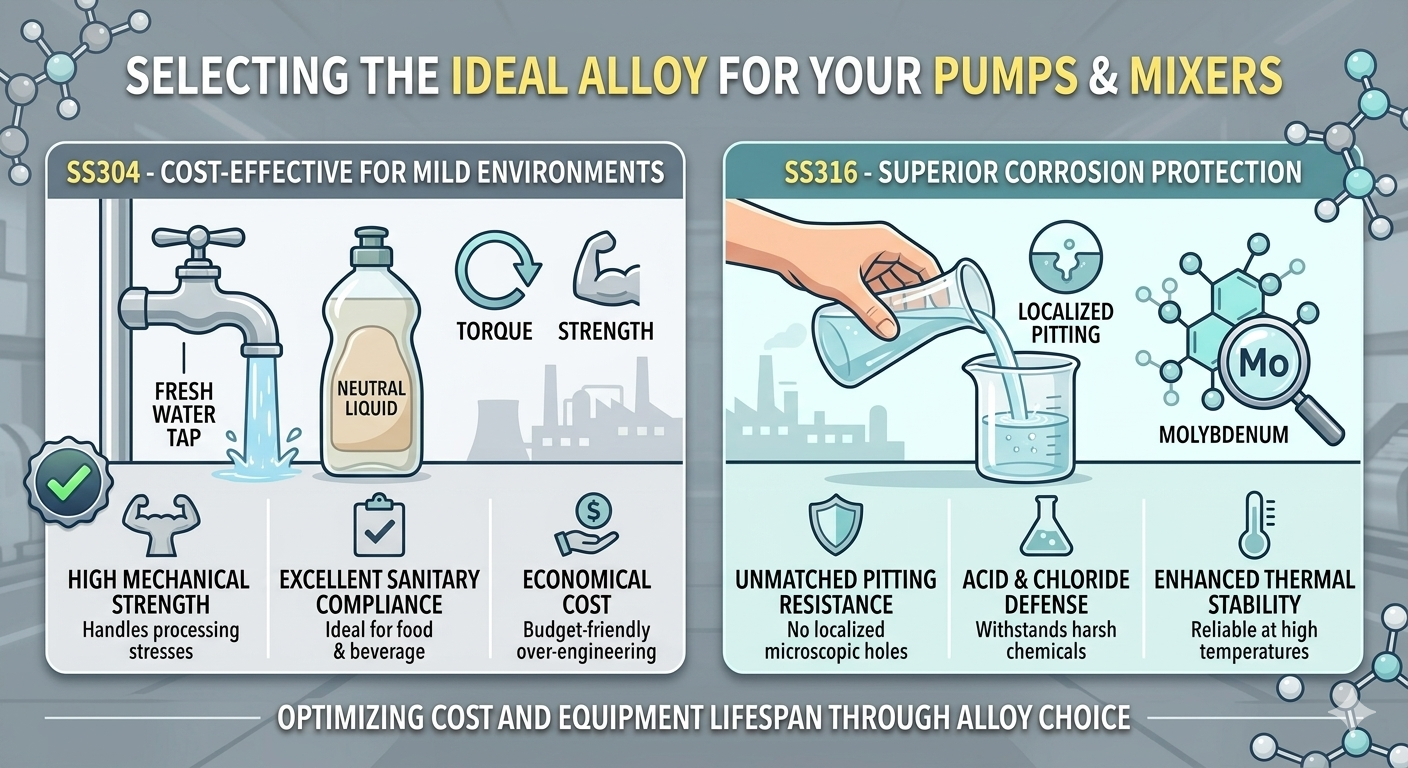
SS304 is the industry's go-to standard for a reason. With 18% chromium and 8% nickel, it forms a robust passive oxide layer that protects against atmospheric corrosion and mild chemical exposure. For processing lines handling clean water, dairy, beverages, fruit juices, and non-aggressive lotions or soaps, SS304 delivers exceptional mechanical strength, sanitary compliance, and rust-free performance at a highly competitive price. If your process fluids are neutral, slightly acidic, and free from chlorides, an SS304 pump or mixer will serve you reliably for years without over-engineering your budget. It's the smart choice for roughly 70% of standard food-grade and light chemical applications.
SS316: The Premium Shield for Hostile Environments
When your process involves salt, chlorides, brines, or aggressive acids, SS316 is not a luxury—it's a necessity. The addition of 2–3% molybdenum transforms the alloy's resistance to pitting and crevice corrosion, which are the silent killers of lesser metals in high-stress, corrosive environments. In real-world scenarios, an SS316 pump or mixer is indispensable for handling soy sauce, seafood brines, chemical slurries, and pharmaceutical components requiring steam-in-place (SIP) sterilization. While SS316 typically carries a 10–20% price premium over SS304, this upfront investment pays for itself many times over by preventing shaft failures, product contamination, and unscheduled maintenance shutdowns.
Making the Right Call for Your Processing Line
Here's my advice as a manufacturer who has seen both triumphs and disasters across hundreds of installations: let your process medium guide the decision, not the initial price tag. If you're handling water-based, neutral, or mildly acidic fluids with no salt or chlorine, go with SS304—it's your most cost-effective path to reliable performance. But if your medium contains salt, chlorides, hot acids, or requires aggressive cleaning protocols, invest in SS316. The extra cost is negligible compared to the expense of replacing a corroded impeller or recalling a contaminated batch. By matching the alloy to your specific chemical environment, you ensure maximum equipment lifespan, zero unexpected downtime, and the best long-term return on your investment. Trust me, your maintenance team—and your profit margins—will thank you.