
English
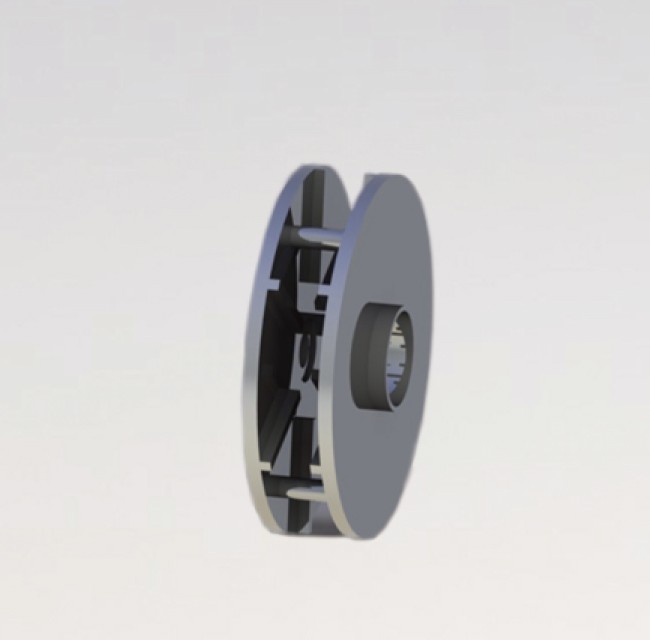
In the world of industrial fluid handling, the impeller has long been regarded as the undisputed heart of the pump. For over a century, the design of this heart remained largely unchanged: curved blades, vanes, or screws designed to physically strike, scoop, and push fluids from the intake to the discharge.
While this brute-force methodology works efficiently for clean liquids like water, it introduces a severe mechanical vulnerability when applied to harsh, abrasive, high-solid slurries or delicate, shear-sensitive fluids. In these demanding environments, traditional vaned impellers act like blenders—destroying fragile products, while simultaneously being eroded into scrap metal by abrasive solids.
The engineering world needed a paradigm shift. Enter the blade-free impeller—the core component of Disc Pump technology.
Instead of traditional blades, this revolutionary system utilizes a series of parallel, smooth, flat discs known as a Disc Pack. But how can a pump successfully move highly viscous, abrasive, or delicate fluids without a single vane to push them? The answer lies in mastering the laws of boundary layer physics.
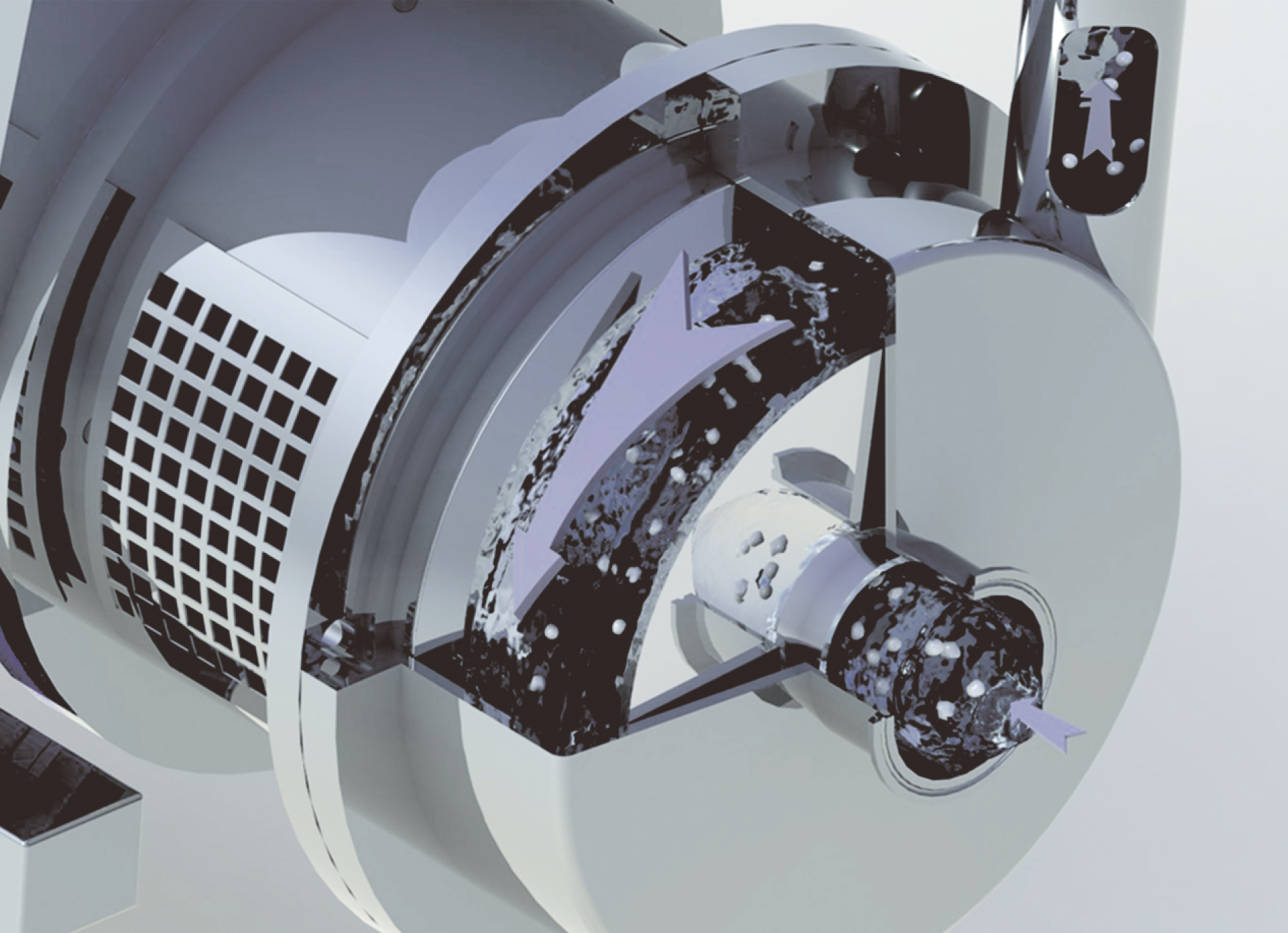
To understand how a disc pump operates, one must look at the anatomy of its rotative element. The traditional vaned impeller is replaced entirely by a Disc Pack.
A standard Disc Pack consists of:
There are no pockets, no tight tolerances, no sharp angles, and—most importantly—no vanes.
The operation of a blade-free impeller relies entirely on two fundamental principles of fluid mechanics: the Boundary Layer Effect and Viscous Drag.
When the Disc Pack begins to rotate within the pump casing, the fluid immediately adjacent to the smooth surface of the discs is affected by molecular friction. Because of the fluid's inherent viscosity, a microscopic layer of molecules "sticks" to the spinning discs. This creates a highly stable, stationary layer of fluid relative to the disc surface, known as the Boundary Layer.
Once the boundary layer is firmly established, it acts as a cushion. As the discs continue to spin, the boundary layer exerts a molecular pulling force—called Viscous Drag—on the next layer of fluid molecules adjacent to it. This layer pulls the next, and so on, cascading across the precision gaps between the discs.
Instead of being violently slapped by a metal blade, the fluid is smoothly pulled into a powerful, concentric laminar flow stream. The rotating discs generate velocity and pressure dynamically through molecular adhesion, drawing fluid into the wide-open center of the Disc Pack and smoothly guiding it out through the discharge.
By removing the vanes, the Disc Pack eliminates the single greatest point of failure in traditional fluid handling systems. This design delivers four game-changing advantages to modern processing plants:
In a standard centrifugal pump, hard abrasive solids (like mining tailings, sand, or fly ash) crash violently into the leading edges of the impeller blades. This continuous impingement causes severe pitting, erosion, and rapid mechanical failure. In a disc pump, because the fluid travels in a serene laminar flow parallel to the discs, solids never crash into the pump internals. The boundary layer acts as a protective fluid shield. Abrasive materials glide through the pump without touching the metal discs, virtually eliminating wear.
Fibrous materials, rags, plastic debris, and large solids are notorious for wrapping around traditional impeller vanes, choking the pump and triggering emergency shutdowns. The completely open center of the blade-free Disc Pack means there is nothing for rags or fibers to catch on. If a solid object can fit through the inlet pipe, it will effortlessly pass through the Disc Pack without clogging.
Many modern industrial fluids are incredibly delicate. High-velocity vaned impellers subject fluids to massive shear forces, which can break down chemical polymers, ruin cosmetic emulsions, or crush fragile food products (like fruit chunks or whole cells). Because a Disc Pack uses gentle molecular friction rather than impact, it imparts virtually zero shear stress. The fluid integrity is perfectly preserved from inlet to outlet.
Unlike positive displacement pumps (like peristaltic or lobe pumps) that push fluid in structural "pockets" and cause violent pressure spikes, the Disc Pack provides continuous, smooth energy transfer. This zero-pulsation performance is critical for coating applications, chemical dosing, and filtering systems where pressure stability is paramount.
The anatomy of a blade-free impeller proves that sometimes, the most effective engineering solution is not to push harder, but to design smarter. By abandoning traditional vanes and harnessing the natural boundary layer of the fluid, the Disc Pack transforms fluid handling from a high-wear, high-maintenance chore into a highly efficient, sustainable, and reliable process.
For industrial operations looking to reduce downtime, slash maintenance costs, and protect their most sensitive products, switching to disc pump technology is no longer an alternative—it is the modern standard.