
English
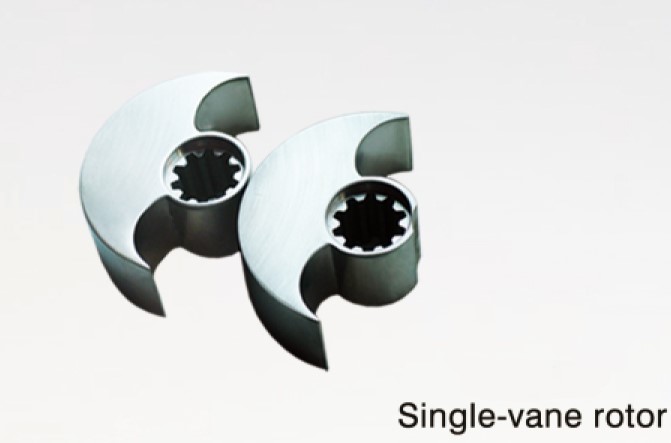
In the world of positive displacement pumps, the rotary lobe pump stands out as a highly versatile and efficient solution for transferring high-viscosity fluids and shear-sensitive materials. At the very heart of every rotary lobe pump is its rotor profile. While various configurations exist for general purposes, the single-lobe rotor represents a highly specialized engineering solution designed to tackle the toughest fluid handling challenges.
This comprehensive guide explores everything you need to know about single-lobe rotors in rotary lobe pumps, including their fundamental design characteristics, working principles, unique advantages, and typical industrial applications.
A rotary lobe pump operates using two synchronized rotors that rotate in opposite directions inside a pump casing. As they turn, they create expanding and contracting cavities that draw fluid into the pump and push it out the discharge port.
A single-lobe rotor features only one protruding lobe (or wing) on each rotor shaft. Because there is only one lobe per rotor, the internal geometry of the pump chamber changes significantly compared to configurations with multiple lobes. The lack of multiple segments creates a much larger, unobstructed displacement cavity between the rotor body and the pump housing. This unique design allows the pump to handle complex, challenging materials that would otherwise clog, jam, or damage the pumping equipment.
The operation of a single-lobe rotary lobe pump is continuous and reliable. It can be broken down into three distinct operational phases:
Choosing a single-lobe rotor configuration for your rotary lobe pump provides several distinct mechanical and operational benefits that make it indispensable for specific fluid transfer processes:
The most prominent advantage of a single-lobe rotor is its ability to pass incredibly large solid particles without jamming. In alternative pump designs, the space between the rotor segments is relatively narrow. If a large stone, fruit chunk, or piece of bone enters the pump, it can easily bridge the gap and lock up the equipment. The giant cavity of a single-lobe rotor eliminates this bottleneck, allowing the pump to handle solids nearly equal to the size of the inlet port.
Many fluids are highly shear-sensitive, meaning their physical structure, viscosity, or texture breaks down when subjected to mechanical friction, turbulence, or agitation. Examples include cell cultures, polymer solutions, and food emulsions like mayonnaise. Single-lobe rotors rotate at lower speeds and feature fewer meshing points per revolution, which drastically reduces the internal shear stress applied to the medium.
When fluids become extremely thick or non-Newtonian (such as heavy sludges, pastes, or tars), filling a small pump cavity can be highly inefficient and lead to starvation. The massive open area of a single-lobe rotor makes it much easier for highly viscous fluids to completely flood the chamber during the suction phase, preventing cavitation and maintaining high volumetric efficiency.
Because there are fewer contact areas and wider internal clearances, abrasive particles suspended in a liquid (like sand or grit in municipal wastewater) cause significantly less erosive wear on a single-lobe rotor. The material flows freely through the large chamber without being ground against the pump walls, protecting the integrity of the equipment.
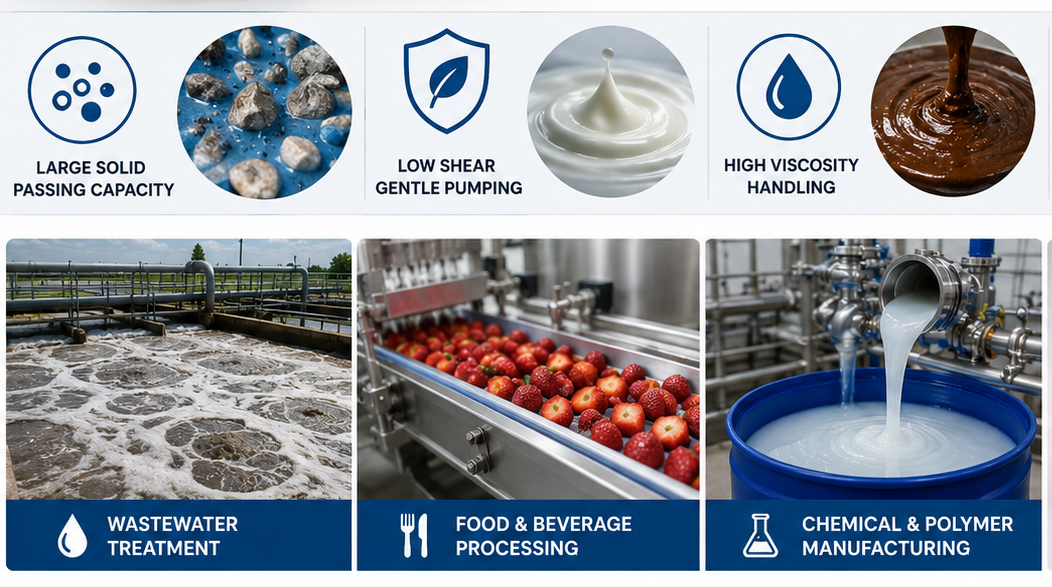
Due to their robust design and specialized capabilities, rotary lobe pumps equipped with single-lobe rotors are critical assets in several demanding industries:
In municipal and industrial wastewater facilities, pumps must handle primary sludge, digested sludge, scum, and scum line transfers. This medium frequently contains rags, hair, plastics, pebbles, and high concentrations of abrasive grit. Single-lobe rotary lobe pumps are the industry standard here because they can pass these solids without clogging, and their reversible rotation makes clearing accidental blockages incredibly simple.
Maintaining product integrity is vital in food manufacturing. Single-lobe rotors are widely utilized to transport food items containing fragile solids. Typical examples include:
In the chemical sector, single-lobe pumps transfer highly viscous resins, latex, adhesives, and polymers. These fluids often require gentle handling to prevent premature coagulation, shearing, or structural breakdown caused by high-velocity mechanical interaction.
To maximize the performance and return on investment (ROI) of your single-lobe rotary lobe pump, keep the following engineering practices in mind:
The single-lobe rotor is a powerhouse component within the rotary lobe pump family. By prioritizing large displacement cavities over multi-point sealing, it provides the ultimate solution for transferring heavy solids, highly viscous sludges, and delicate, shear-sensitive fluids. Whether you are upgrading a municipal wastewater facility or scaling up a gourmet food production line, integrating a single-lobe rotor ensures your fluid handling system operates with maximum efficiency and minimal maintenance.