
English
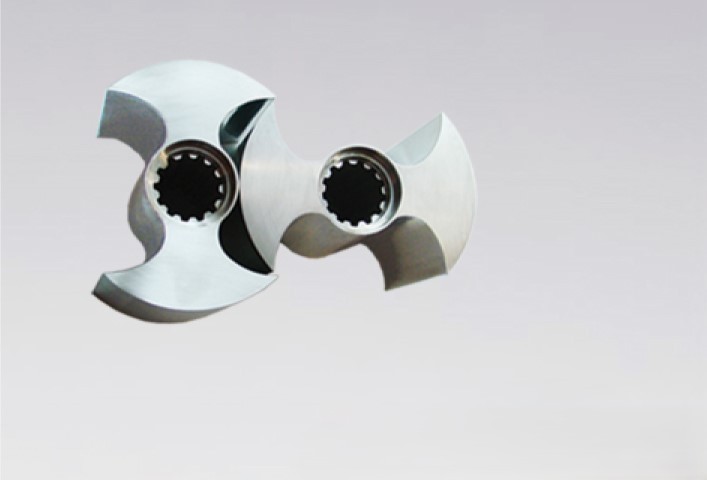
In industrial fluid mechanics, selecting the right rotor profile is one of the most critical decisions when configuring a rotary lobe pump. While multi-lobe or single-lobe configurations serve specific industrial niches, the bi-wing butterfly rotor—often referred to simply as the bi-wing or double-lobe butterfly rotor—represents a highly engineered compromise. It bridges the gap between the high solid-handling capacity of single-lobe designs and the smooth efficiency of multi-lobe profiles.
This comprehensive technical guide explores the unique design, core working principles, distinct advantages, and widespread industrial applications of bi-wing butterfly rotors in rotary lobe pumps.
A rotary lobe pump belongs to the positive displacement category, utilizing two synchronized, non-contacting rotors driven by an external timing gearbox. These rotors spin in opposite directions within a precision-machined pump casing to move fluid from the inlet to the outlet.
A bi-wing butterfly rotor features two symmetrical, wing-like lobes on each rotor shaft. The geometric profile mimics the wings of a butterfly, featuring smooth, sweeping contours and broad sealing faces. Unlike traditional sharp-edged dual-lobe designs, the butterfly profile maximizes the internal volume of the displacement cavity while maintaining thick, robust rotor walls. This precise engineering delivers a balance of generous cavity space and high structural integrity under pressure.
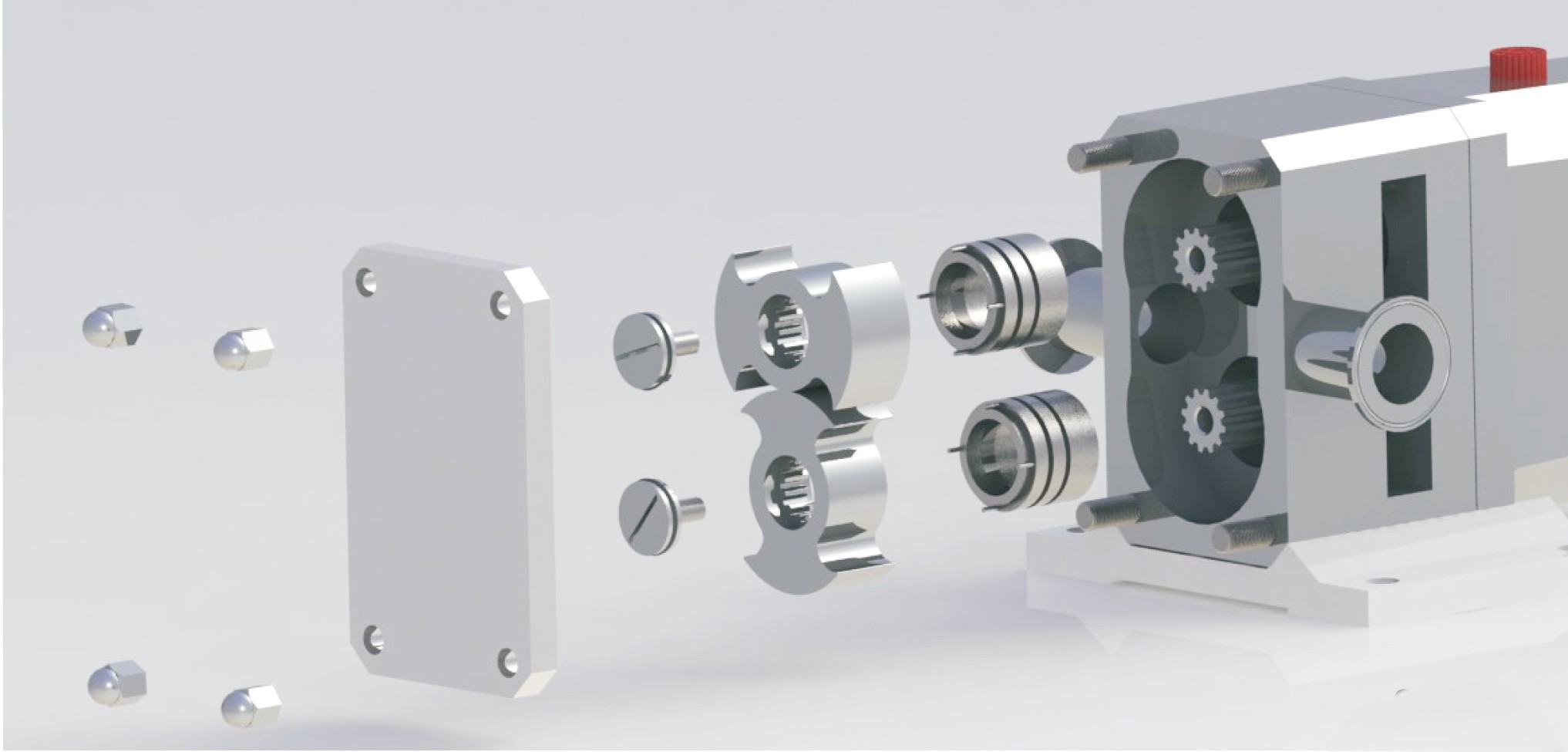
The mechanical operation of a rotary lobe pump utilizing bi-wing butterfly rotors is continuous and cyclic. The process moves through three continuous operational phases:
Bi-wing butterfly rotors are a popular configuration in global manufacturing because they provide unique performance capabilities:
Thick, non-Newtonian, or highly viscous materials offer significant resistance when entering a pump. Small cavities in multi-lobe pumps often suffer from incomplete filling, leading to starvation, vibration, and cavitation. The large, sweeping wing design of the bi-wing rotor provides an open geometry that allows dense fluids—such as pastes, glues, and concentrated syrups—to flood the chamber easily, maintaining high volumetric efficiency.
The sweeping, continuous curves of a butterfly profile eliminate the sharp corners, tight crevices, and dead zones where product buildup could occur. This seamless geometry is highly receptive to Clean-in-Place (CIP) and Sterilize-in-Place (SIP) protocols. For industries where bacterial growth or batch contamination is a critical risk, the bi-wing rotor offers an easily cleanable surface profile that meets strict sanitary standards.
Many premium fluids are highly shear-sensitive. Subjecting them to violent agitation, friction, or crushing forces can alter their viscosity, ruin their texture, or destroy delicate ingredients. The bi-wing butterfly rotor operates at lower rotational speeds and minimizes internal turbulence. The fluid is transported in large, calm pockets, preserving the physical characteristics of sensitive mixtures.
Compared to single-lobe rotors, which create larger individual fluid pockets and higher flow pulsation, the bi-wing configuration provides a much smoother flow profile. The two symmetrical wings create more continuous sealing lines along the pump casing, reducing internal slip (backflow) and providing stable discharge pressure while keeping system pulsation manageable.
Thanks to their hygienic architecture and viscous-fluid capabilities, rotary lobe pumps with bi-wing butterfly rotors are widely used in several demanding global industries:
Bi-wing rotors are heavily utilized across food manufacturing lines due to their gentle handling and sanitary design. Typical applications include:
Personal care products must be pumped without losing their smooth, emulsified textures. Bi-wing butterfly rotors are standard for transferring:
In sterile environments, safety and purity are paramount. Bi-wing pumps safely convey:
Beyond sanitary uses, the robust sealing lines of the bi-wing design make it highly effective for handling chemical compounds, such as:
To ensure maximum uptime and extend the operational life of your bi-wing butterfly rotary lobe pump, follow these essential maintenance practices:
The bi-wing butterfly rotor is a versatile and reliable component within positive displacement pumping technology. By combining a spacious internal cavity with a crevice-free, sweeping geometric profile, it provides a highly effective solution for handling high-viscosity, shear-sensitive, and strictly hygienic fluids. Integrating bi-wing butterfly rotors into your rotary lobe pump systems helps protect product quality, reduce pulsation, and ensure a highly cleanable, efficient production environment.