
English
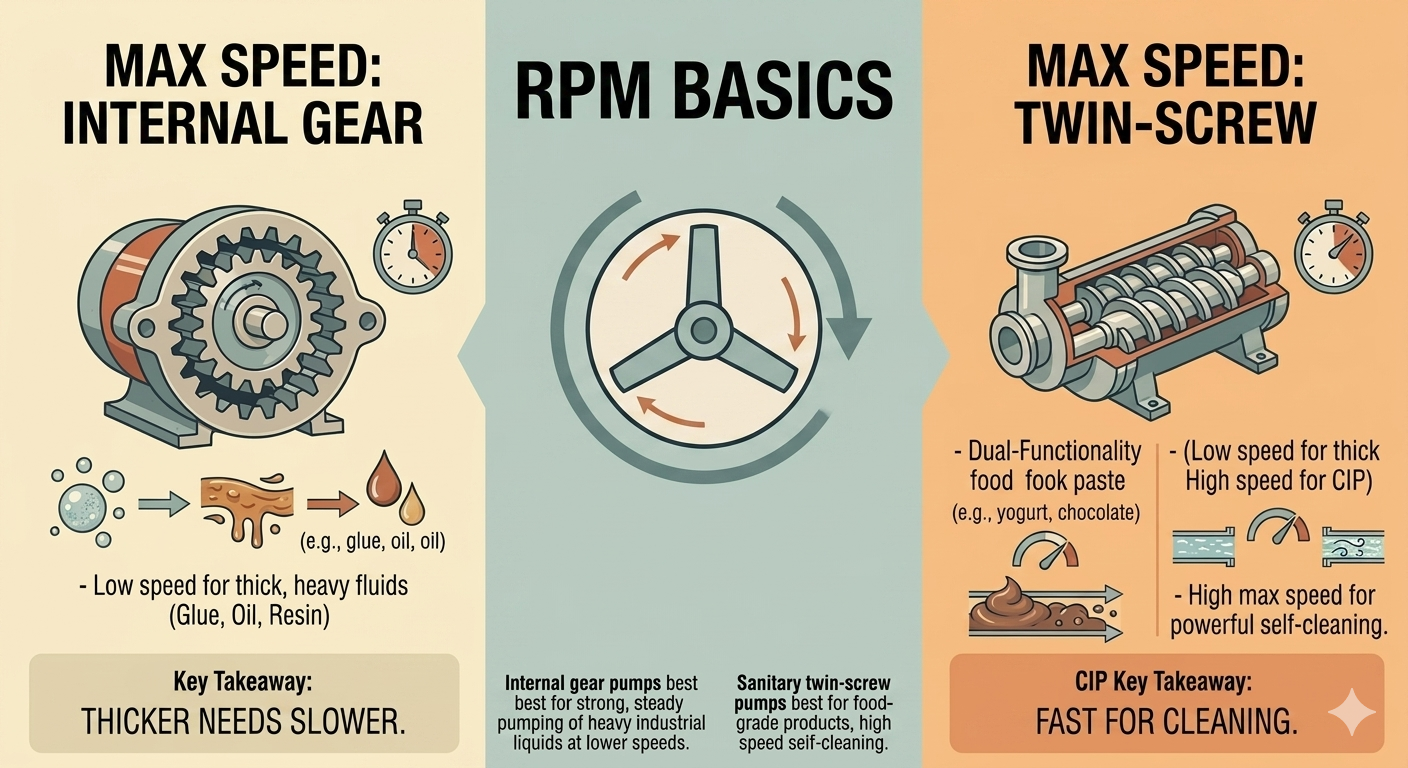
When you are sourcing pumps for your production line, every detail matters—especially the pump's maximum speed, expressed in revolutions per minute (RPM). This simple number tells you the fastest your pump can spin without causing damage or poor performance.
Think of it as the redline on a car's tachometer: exceed it, and you risk costly breakdowns, fluid shearing, or contamination. As an experienced manufacturer of industrial pumping solutions, I want to walk you through the critical differences between internal gear pumps and sanitary twin-screw pumps, so you can make a buying decision that saves money and downtime.
Internal gear pumps typically operate between 500 RPM and 1,500 RPM. Why this lower speed limit?
Their gear-inside-a-gear design creates a tight, positive displacement action ideal for thick, heavy liquids like glue, oil, resin, or asphalt.
When you pump these viscous fluids at high speed, the liquid simply cannot flow fast enough to fill the gaps between the gears. This results in cavitation—air pockets, loud noise, vibration, and accelerated wear on the pump's internals.
Sanitary twin-screw pumps are in a different league. Their maximum speed often reaches 3,000 RPM or even 3,600 RPM. Why the dramatic difference?
These pumps are engineered for two distinct duties in one single machine:
This dual-duty capability means you save capital cost, floor space, and cleaning time. For example, a dairy plant using twin-screw pumps can switch from pumping 50,000 cP yogurt at low speed to flushing with hot water at high speed—all in the same unit.
Do not be lured by the highest max RPM number alone. Always evaluate your fluid's viscosity, temperature, and abrasiveness before specifying the final operating speed.
Quick Selection Rule:
In my decades of building pumps for plants around the world, I have seen buyers save thousands of dollars per year by choosing the right RPM range upfront. Think beyond the spec sheet: your pump's maximum speed is not just a number—it is a promise of efficiency, durability, and cleanliness for your specific fluid.